Rhonda Byrne
The SecretRhonda Byrne is the author of The Secret and the central figure in its movement from personal collapse to global circulation. Her decisive significance lies in the way she turns a private encounter with an old book into a public mission: tracing a hidden teaching through history, locating contemporary teachers, producing a film, and addressing readers as participants in the book’s promised transformation.
Identity and Background
Byrne presents herself first through a period of severe disruption. Her life had collapsed after she had worked herself into exhaustion, her father had died suddenly, and her relationships with colleagues and loved ones had fallen into turmoil. The crisis is not treated merely as background biography; it becomes the emotional threshold from which her later work emerges. Out of what she calls her greatest despair came what she understood as her greatest gift: a glimpse of The Secret to life.
That glimpse arrived through a hundred-year-old book given to her by her daughter Hayley. The gift supplied the immediate object around which Byrne’s investigation formed, while the surrounding crisis supplied its urgency. Rather than keeping the discovery as a private consolation, she began tracing The Secret backward through history and encountered a lineage that she associated with Plato, Shakespeare, Newton, Hugo, Beethoven, Lincoln, Emerson, Edison, and Albert Einstein. Her astonishment at the apparent obscurity of this knowledge became the question that propelled the next stage of her work.
From Discovery to Search
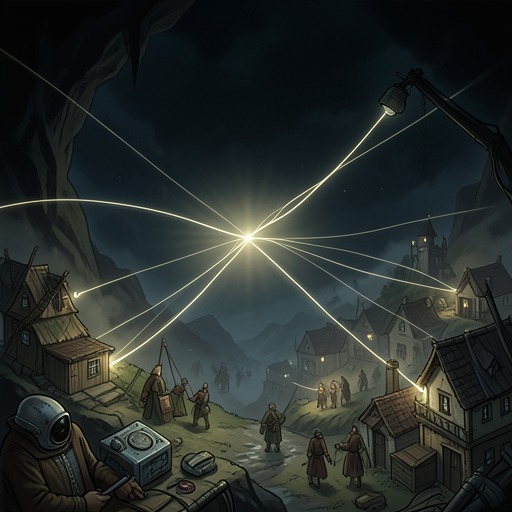
Byrne’s response to the discovery was an intense desire to share The Secret with the world. She began looking for people alive in the present who knew and practiced it, and the search is narrated as a chain of linked encounters. One teacher led to another; a wrong turn could redirect her toward vital information; even an apparently accidental click in an internet search became, in her account, part of the path toward the next teacher.
This pattern gives Byrne’s biography a strongly purposeful structure. The search is not described as a neutral research project governed only by planned procedures. It is presented as a process in which attention, faith, and coincidence continually draw the needed person or fact closer. Byrne says that she became a magnet, and the image explains how she interprets the sequence: discovery generates expectation, expectation guides further searching, and each successful connection confirms the principle she is attempting to communicate.
Creating the Film
The idea of bringing The Secret to the world as a film eventually became fixed in Byrne’s mind. Over the following two months, her film and television production team learned the teaching themselves because she regarded that shared knowledge as essential to the undertaking. The project therefore begins not with a secured cast or a completed production plan, but with a collective commitment to the idea that the film was meant to embody.
At the point when Byrne flew from Australia to the United States, not a single teacher had been secured to film. Nevertheless, she traveled with what the account calls utter faith. Seven weeks later, the team had filmed fifty-five teachers across the United States and accumulated more than 120 hours of footage. Eight months after that, The Secret was released. Byrne interprets the speed and scale of this achievement through the very principle the film teaches: at every step and with every breath, the team used The Secret to create The Secret, magnetizing people and resources toward the production.
Public Mission and Reader Address
After the film swept around the world, Byrne and her team received accounts from people who said they had used The Secret in radically different circumstances. These reports included healing from chronic pain, depression, and disease; walking again after an accident; recovering from a deathbed; receiving large sums of money or unexpected checks; finding homes, partners, cars, jobs, and promotions; transforming businesses within days; and restoring stressed relationships involving children to harmony.
The reported responses also extended beyond individual adult experience. Children were said to have used The Secret to attract high grades and friends. Doctors shared it with patients, universities and schools with students, health clubs with clients, and churches and spiritual centers with congregations. Secret parties appeared in homes around the world, where families and loved ones exchanged the teaching. The examples range from a specific feather to ten million dollars, a contrast that presents the principle as applicable to both small personal wishes and life-changing ambitions.
Byrne states that her intention in creating The Secret was, and remains, to bring joy to billions around the world. The thousands upon thousands of letters arriving from people of every age, race, and nationality are presented as evidence that this intention is being realized. Her claim that there is not a single thing readers cannot do with the knowledge defines the book’s expansive promise and its direct emotional appeal.
The book contains the words of twenty-four teachers whose filmed contributions were recorded across the United States at different times. Byrne frames their separate appearances as a unified voice, while also adding stories of The Secret in action and the paths, tips, and shortcuts she learned. The result is a hybrid work: part testimony, part anthology of teachers, part practical guide, and part personal account of the project that assembled them.
Narrative Role and Significance
Byrne occupies several roles at once. She is the person who receives the initial revelation, the investigator who traces it through historical and contemporary sources, the producer who organizes its conversion into film, and the author who reshapes the filmed material into a book. Her authority therefore depends less on a conventional fictional character arc than on the visible continuity between belief and action: crisis leads to discovery, discovery to search, search to production, and production to a worldwide readership.
Her address to the reader completes that movement. Byrne explains that she capitalizes the word “You” in certain places so that readers will feel that the book was created personally for them. This typographical choice turns the publication into a direct channel of address rather than a detached report. The reader is not merely asked to observe Byrne’s journey or listen to the teachers; the reader is positioned as the intended recipient of the same knowledge and as the next participant in its circulation.
In that structure, Byrne’s personal intention becomes the organizing force of The Secret’s rhetoric, but the book also leaves the teaching open to readerly enactment. Its meaning is carried through repeated acts of reading, sharing, application, and testimony. Byrne begins with a crisis that isolates her, yet ends by imagining a community extending across ages, nationalities, professions, families, and spiritual institutions. Her narrative role is consequently both personal and infrastructural: she is the origin point of the account and the architect of the network through which the account is meant to continue.